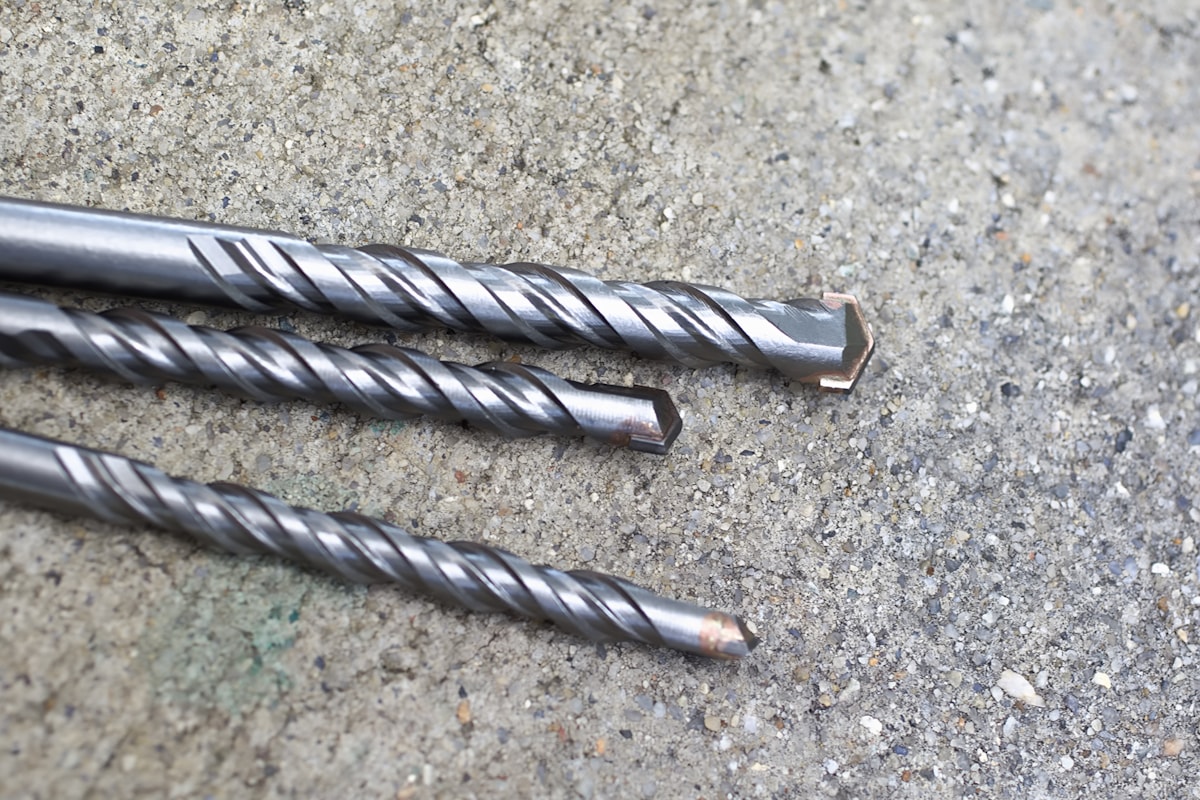
Every diamond core drill bit size is defined by its outer cutting diameter — the measurement across the outside of the cutting segments, not the inside of the hole it produces. Understanding this distinction matters because the hole left in the wall will be slightly smaller than the bit's stated size due to kerf, and pipe fittings have both an outer diameter (OD) and a nominal size that are often different numbers.
This guide provides the complete UK size reference: what each standard diameter is used for, which pipe OD it suits, and where the choice between adjacent sizes matters.
Core Drill Bit Sizes at a Glance
- Bit size = outer cutting diameter — the finished hole is slightly smaller due to kerf
- 107mm or 110mm: standard single-pipe concentric boiler flue | 117mm: 110mm soil stack
- 125mm or 132mm: 100mm extractor fan spigot | 50–52mm: 40mm waste pipe
- Dry bits: brick and blockwork | Wet bits: dense concrete and reinforced concrete
- Thread standard: ½" BSP for dedicated core drills; SDS Plus/Max adaptors for rotary hammers up to ~65mm
UK Diamond Core Drill Bit Size Chart
| Bit OD | Primary UK Application | Pipe / Fitting OD | Notes |
|---|---|---|---|
| 38mm | Cable entries, 32mm conduit | Up to 32mm OD | Most common for EV charger cable entries through external wall |
| 52mm | 40mm waste pipe, overflow | 40mm OD | Basin, bath, and shower waste runs through external masonry |
| 65mm | 50mm overflow, 63mm pipe | 50–56mm OD | Bath overflow pipes; some tumble dryer exhaust ducts |
| 82mm | 75mm waste, small flue liner | 63–75mm OD | Less common; used for older soil pipe formats and specialist flue liner systems |
| 107mm | 100mm boiler flue, extractor fan (100mm) | 100mm OD | Standard condensing boiler single-pipe flue; 100mm bathroom extractor |
| 117mm | 110mm soil and waste pipe | 110mm OD | Most common size for soil stacks and WC discharge pipe entries |
| 127mm | 110mm soil stack (4-inch standard) | 110mm OD with clearance | Use when 117mm is too tight — especially with pipe brackets or bends near the wall |
| 152mm | 150mm service duct, large ventilation | 150mm duct OD | Commercial HVAC and service duct penetrations through concrete frames |
| 200mm+ | Large service penetrations, structural sampling | Various | Requires rig-mounted wet core machine; specialist contractor territory |
How to Choose Between Adjacent Sizes
The standard rule is to use a bit diameter 5–10mm larger than the pipe or fitting's outer diameter. This gives enough clearance to pass the fitting through the hole without forcing and allows for slight misalignment of the drilled angle.
Where two sizes could work — 117mm versus 127mm for a 110mm soil pipe, for example — choose based on the installation requirements:
- Use 117mm when the pipe runs straight through with no bends close to the wall and no pipe bracket or boss needed near the entry point.
- Use 127mm when there is a bend close to the wall face, a soil pipe boss near the entry, or if the drill angle may not be perfectly perpendicular (which widens the effective hole needed).
For boiler flues, the difference between 107mm and 117mm is more specific. See the dedicated boiler flue core drill size guide for twin-pipe and concentric flue sizing.
How Deep Can a Standard Diamond Core Bit Drill?
Standard UK diamond core bits cut to 150mm effective depth. This suits the majority of UK cavity wall constructions where the outer leaf is 102.5mm brick. For solid brick walls (215mm or more), or insulated cavity walls with total depth exceeding 150mm, extension rods are required.
The Marcrist PC850 and DCU350 kits include a pilot drill and are available in individual sizes or multi-bit sets covering the most common UK diameters. For a full comparison of bit brands and types, see the diamond core drill bits guide.
Connection: ½" BSP Thread
All standard UK diamond core bits use a ½" BSP (British Standard Pipe) female thread on the shank. This connects to:
- A dedicated core drill machine with a ½" BSP chuck
- An SDS Plus or SDS Max adaptor (for smaller diameters in soft masonry)
- Extension rods threaded ½" BSP male × female
Confirm your machine or adaptor thread before ordering. A small number of European and American machines use M16×1 or proprietary threads that require a conversion adaptor. See the accessories guide for adaptor options.
How Do I Choose a Core Bit Size for Imperial Plumbing Pipes?
Older UK plumbing installations used imperial pipe sizes — 1½", 2", 3", and 4" nominal bore. These do not directly correspond to metric ODs. A 4-inch (nominal) soil stack in old installations typically has an OD of approximately 113mm, making 127mm the safest drill size. Always measure the actual pipe OD before selecting a bit if you are working on pre-1970 pipework.