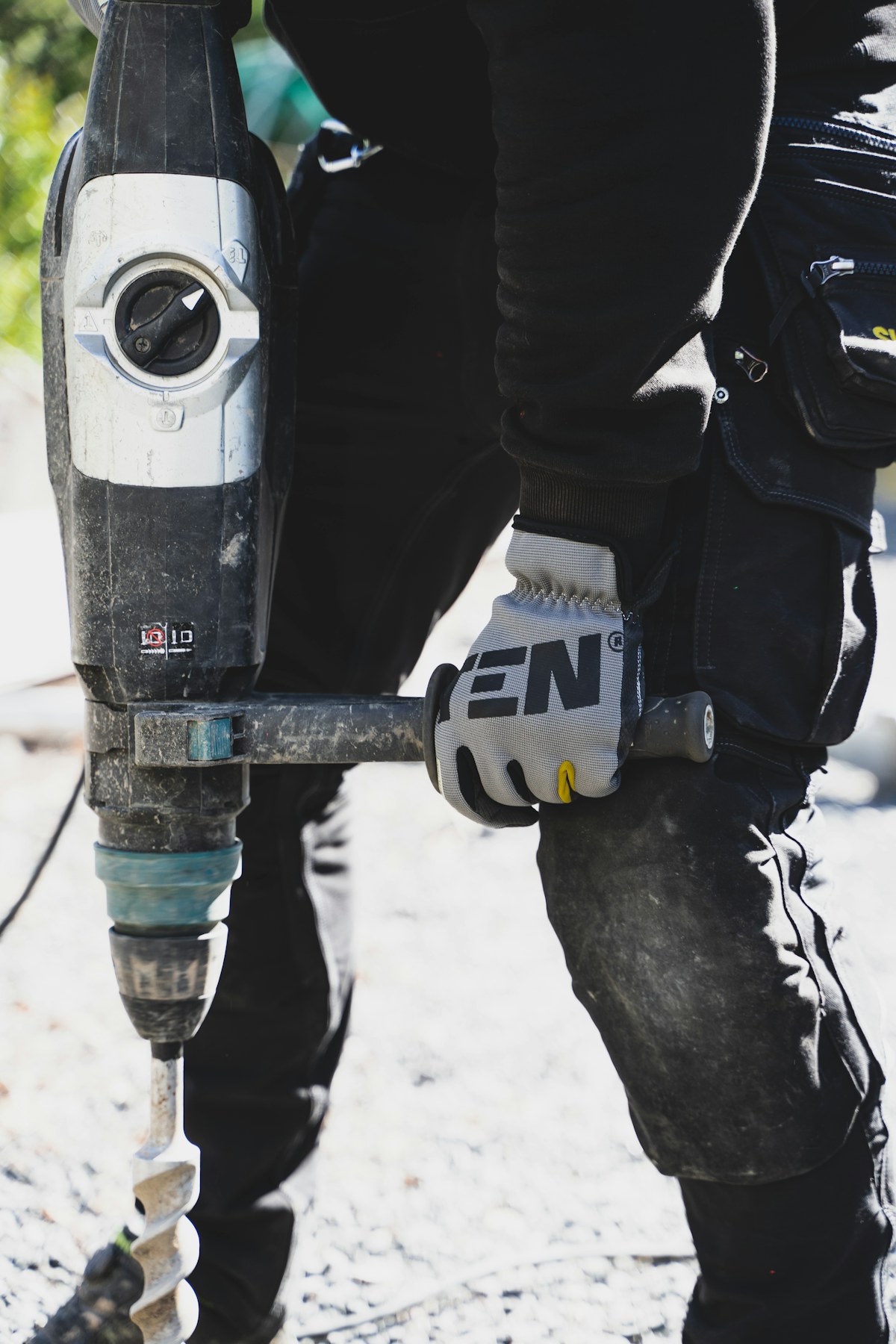
Wall chasing cuts a narrow rectangular channel into the face of a masonry wall to allow conduit, pipework, or cable to be buried flush with the wall surface before plastering. Done correctly with a diamond wall chaser and M-Class dust extraction, it produces a clean, parallel-sided channel with minimal adjacent damage, low dust emission, and a straight chase line that requires no secondary dressing before the conduit is set in. Done incorrectly with an angle grinder and no extraction, it generates some of the highest respirable crystalline silica (RCS) dust concentrations of any trade operation — and it creates an uncontrolled, rough channel that takes twice as long to finish.
Wall Chasing at a Glance
- Standard chase dimensions: 25–30mm wide × 25–30mm deep for 20mm conduit; 50mm wide × 35mm deep for 25mm conduit
- Diamond wall chaser: two parallel blades, clean slot, minimal vibration — correct tool for brick and blockwork
- Angle grinder: inferior method — uncontrolled kerf, higher vibration, significantly more dust
- M-Class dust extraction mandatory under COSHH 2002 for any masonry chasing task
- Do not chase into load-bearing walls deeper than the permitted depth — Building Regs Part A applies
- Horizontal chases in load-bearing walls: maximum 1/6 of wall thickness depth (Building Regs Approved Doc A, Table 5)
- Chasing into concrete: angle grinder is not suitable — use core drilling or diamond saw cutting
Wall Chasing Applications
| Application | Conduit / Pipe | Chase Width | Chase Depth |
|---|---|---|---|
| 20mm electrical conduit | 20mm PVC conduit | 25–30mm | 25–30mm |
| 25mm electrical conduit | 25mm PVC conduit | 35mm | 30–35mm |
| 15mm copper or plastic pipe (hot/cold water) | 15mm OD pipe | 25mm | 25–30mm |
| 22mm copper or plastic pipe | 22mm OD pipe | 30mm | 30–35mm |
| 28mm copper or plastic pipe | 28mm OD pipe | 40mm | 35–40mm |
| Twin-and-earth cable (direct without conduit) | 1.0–4.0mm² cable | 20–25mm | 15–20mm |
| Gas pipe sleeve (where permitted by Gas Safe regs) | Varies — confirm with Gas Safe engineer | As pipe + sleeve | Confirm with structural check |
For pipe and conduit sizing in relation to core drilling entry points: core drilling for plumbers, core drilling for HVAC, and core drilling for electricians.
Diamond Wall Chaser vs Angle Grinder
Wall chasing is carried out with one of two tools — a dedicated diamond wall chaser or an angle grinder. The difference in dust generation, chase quality, and operator safety between the two tools is significant.
Diamond Wall Chaser
A dedicated wall chaser runs two parallel diamond blades on a fixed-depth guard, cutting a clean parallel-sided slot of precise width and depth in a single pass. The blade spacing is adjustable, typically 10–50mm, to accommodate different conduit and pipe sizes. Modern diamond wall chasers have a built-in dust shroud and a vacuum connection port as standard — the shroud contains the majority of the dust generated at the cutting face and connects directly to an M-Class vacuum. Chase line is straight, chase walls are smooth and parallel, and the core of masonry between the blades breaks out cleanly by light chisel tapping. Correct tool for brick, blockwork, and dense plaster on masonry backgrounds.
Angle Grinder
Wall chasing with an angle grinder uses a single diamond or abrasive disc to cut two parallel lines, with the waste material between removed by chisel. This method creates significantly more dust than a dedicated wall chaser, produces an uneven kerf, and is harder to control for depth and straightness. Without dust extraction, an angle grinder chasing brick generates airborne RCS concentrations that exceed the HSE Workplace Exposure Limit (WEL) of 0.1 mg/m³ within seconds. An angle grinder is not an acceptable substitute for a dedicated wall chaser on any commercial site, and is not best practice on domestic sites. If a wall chaser is not available, the work should wait rather than proceeding with uncontrolled grinding.
M-Class Dust Extraction for Wall Chasing
Wall chasing through brick, block, and plaster generates respirable crystalline silica (RCS) — the same fine dust fraction responsible for silicosis that arises from all masonry cutting operations. The HSE's Construction Information Sheet CIS36 identifies wall chasing as a high-dust generation task requiring M-Class dust extraction as the minimum control.
In practice, compliant dust control for wall chasing requires:
- An M-Class vacuum (meeting EN 60335-2-69 with filtration efficiency ≥99% at 0.3 microns) connected to the wall chaser's dust extraction port
- The vacuum switched on before the chaser blades contact the wall, and switched off only after the blades have fully cleared the material
- The shroud maintained in contact with the wall surface throughout the chase run — if the shroud lifts, dust bypasses the extraction system
- Filter checks and bag emptying carried out with respiratory precautions — collected silica dust remains hazardous
On commercial sites and CDM-notifiable projects, the COSHH assessment must specifically address wall chasing as a task. Risk assessors and principal contractors should not accept "vacuum connected" as sufficient evidence of compliance — the vacuum must be M-Class rated and correctly connected to an effective shroud. See: core drill dust extraction guide and silica dust control in UK construction.
Building Regulations Limits on Chase Depth
Chasing into load-bearing masonry walls is regulated under Building Regulations Approved Document A (Structure). Exceeding the permitted depth or length of a chase in a structural wall can compromise the wall's compressive and lateral load capacity. Key limits from Approved Document A, Table 5 (for walls of 90mm minimum thickness in good condition):
- Horizontal chases: Maximum depth of 1/6 of the wall thickness. In a 102mm half-brick leaf, this is approximately 17mm maximum depth. In a 215mm one-brick wall, approximately 36mm maximum.
- Vertical chases: Maximum depth of 1/3 of the wall thickness; maximum length of 1/3 of the storey height. Multiple vertical chases must be separated by at least twice their depth.
- Accumulation: Do not place chases in the same section of wall on both faces simultaneously — cumulative section loss can exceed the permitted limits.
These limits apply to standard masonry in good condition. Walls showing signs of distress (cracking, stepped crack patterns, bulging) should not be chased until assessed by a structural engineer. Timber frame walls should not be structurally chased — service routes in timber frame construction use the cavity or dedicated service zones in the internal lining.
For full regulatory context: core drilling permits and regulations: UK guide.
Wall Chasing in Refurbishment Programmes
In commercial refurbishment, wall chasing for electrical first-fix and M&E services is typically programmed before wet trades (plastering, screeding) and after structural alterations and concrete cutting are complete. The correct sequencing avoids chasing into freshly plastered surfaces and allows the first-fix M&E to be inspected before finishes are closed in. Key coordination points:
- Confirm no services are buried in the wall before chasing — a CAT scanner (cable and pipe detector) should be used before every chase run in any wall where existing services may be present
- Mark the chase line on the wall and confirm route and depth with the responsible M&E contractor before work starts
- Set the wall chaser depth stop to the required dimension before starting — overrun on depth is not recoverable in a load-bearing wall
- Vacuum the chase clear of loose dust and debris before conduit installation — loose material prevents conduit from seating flush at the required depth
See: core drilling for electricians and core drilling for plumbers for service route coordination and penetration sizing.
Wall Chasing: Common Questions
How deep can I chase a wall without structural implications?
Building Regulations Approved Document A limits horizontal chases in load-bearing masonry to a maximum depth of 1/6 of the wall thickness. For a standard 102mm half-brick leaf, this is approximately 17mm. Vertical chases are permitted to a maximum depth of 1/3 of the wall thickness. These limits apply to structurally sound masonry in good condition. Where the wall is non-load-bearing (internal stud partition, non-structural blockwork), the structural limit does not apply, but the chase must still be kept within the thickness of the material being chased and must not compromise fixings or adjacent structure.
Is M-Class dust extraction legally required for wall chasing?
Yes — M-Class dust extraction is the legal minimum control under COSHH 2002 for wall chasing through masonry. HSE guidance specifically identifies wall chasing as a high-RCS-dust generation task. Without M-Class extraction, RCS concentrations from a running wall chaser in brick or blockwork exceed the HSE Workplace Exposure Limit of 0.1 mg/m³ within seconds. There is no exemption for domestic or small-scale work — COSHH applies to all work activity regardless of site type or project size.
Can I chase into a concrete wall for electrical conduit?
A standard diamond wall chaser is not suitable for concrete — the blades wear rapidly on dense concrete and the chase quality is poor. For shallow chase channels in concrete walls, a diamond angle grinder with appropriate dust extraction is the common trade solution for short runs. For longer service routes through concrete walls, core drilling a series of adjacent holes or diamond saw cutting a narrow slot is more controlled and produces a cleaner result. Where the wall is structural concrete, confirm with a structural engineer that the proposed chase depth and position do not compromise the structural section before cutting.