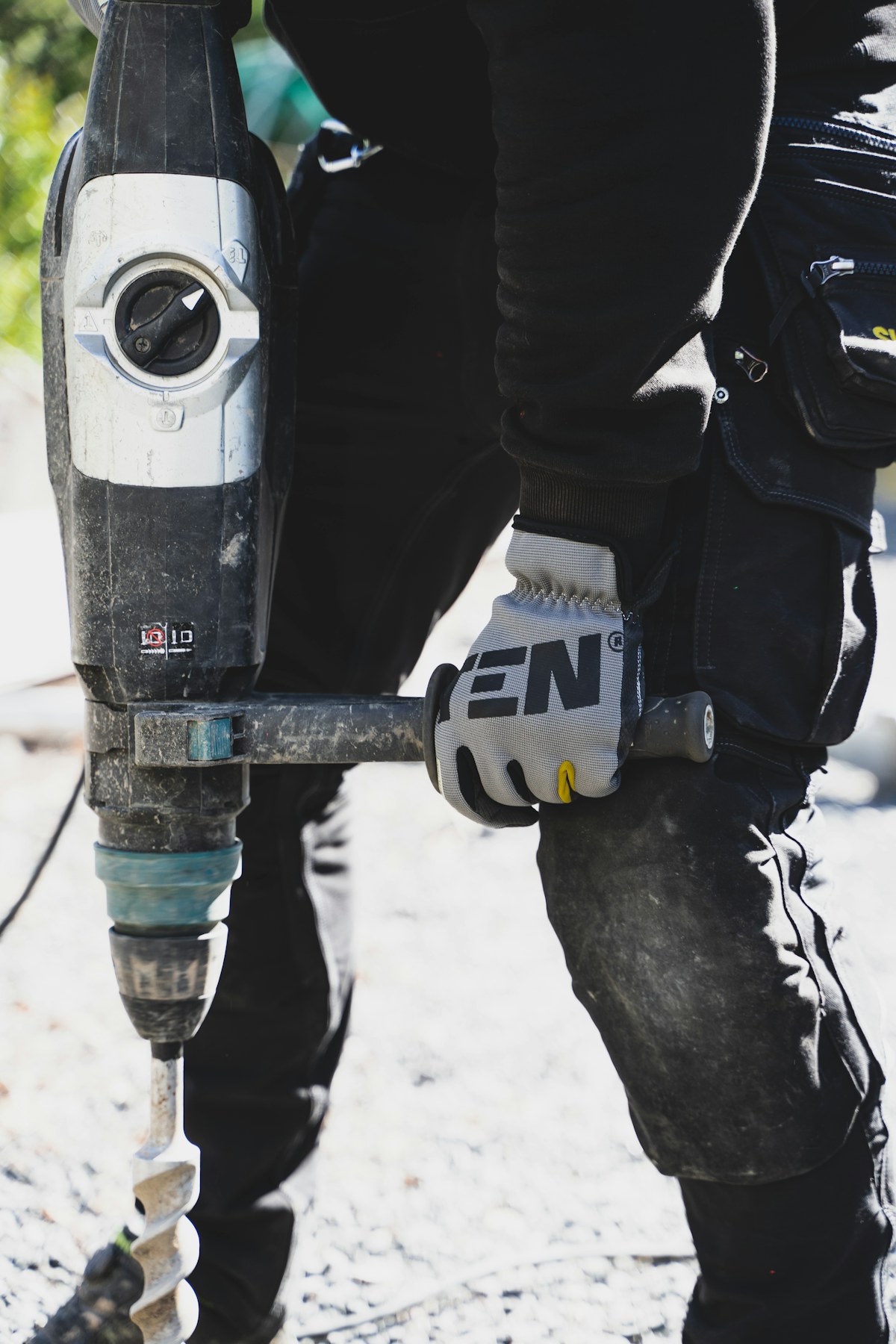
Diamond core drilling is the UK construction industry's standard method for creating clean, circular penetrations through masonry, concrete, and reinforced structures. Unlike percussion drilling, the rotation-only action produces a smooth-sided hole without cracking the surrounding material, operates at lower vibration levels, and generates a contained dust profile that can be controlled to comply with COSHH requirements.
Diamond Core Drilling at a Glance
- Hole diameters: 10mm to 1000mm+ (common trade sizes 38mm–300mm)
- Materials: brick, blockwork, concrete, reinforced concrete, post-tensioned concrete, natural stone, precast
- Methods: wet coring (concrete, reinforced), dry coring (brick, blockwork)
- Applications: boiler flues, HVAC ducts, plumbing stacks, cable entries, structural penetrations, commercial M&E
- Vibration: 2–5 m/s² A(8) — lower than SDS percussion or pneumatic breaking
- Dust control: M-Class vacuum (dry) or water suppression (wet) — COSHH compliant
- UK coverage: commercial, industrial, and domestic projects nationwide
Applications
Domestic Trade Applications
The most frequent domestic diamond core drilling applications are:
- Boiler flue penetrations: 107mm hole through external cavity wall for concentric flue kits — the standard size for modern gas condensing boilers. See: boiler flue core drill size guide.
- Soil stack and drainage: 117mm for 110mm OD soil pipe through external or party walls. See: waste pipe core drill size guide.
- Extractor fans and MVHR: 107mm to 160mm for ventilation duct penetrations. See: extractor fan core drill size guide.
- Cable and conduit entries: 20mm to 65mm for electrical cable, EV charger routes, and data cabling.
- Waste pipe runs: 52mm for 40mm OD waste pipe through external walls or concrete floors.
Commercial and Industrial Applications
Commercial diamond core drilling covers a wider range of diameters and materials:
- M&E riser cores: 100mm to 300mm through reinforced concrete floor slabs for mechanical and electrical service risers in commercial buildings
- HVAC duct penetrations: 150mm to 300mm+ through structural walls and slabs for supply air, return air, and smoke extract ductwork
- Structural service penetrations: coordinated with structural engineer sign-off; positions agreed against structural drawings or GPR scan
- Anchor bolt and fixing holes: 12mm to 75mm precision holes for structural fixings, post-installed anchors, and base plate connections
- Highway and infrastructure: 100mm to 150mm through road slab for utility duct crossings and service reinstatements
Materials
Brick and Blockwork
Standard UK domestic construction — sand-lime brick, engineering brick, aerated concrete block (Thermalite, Celcon), and dense aggregate block — is the most common core drilling substrate. Dry diamond core bits at 300–600 RPM are the correct specification for brick and blockwork. Cavity wall construction (typical 1920s–present) requires the bit to complete two passes through the inner and outer leaf separated by the cavity. See: core drilling through brick walls.
Concrete
Ground-bearing slabs, in-situ concrete walls, and structural floors require wet diamond core bits with a continuous water supply. The water cools the diamond segments, flushes the core slug, and suppresses silica dust. Concrete type determines bit specification: hard-bond bits for soft architectural concrete, soft-bond bits for high-strength structural or pavement concrete. See: core drilling through concrete: UK contractor's guide.
Reinforced Concrete
Reinforced concrete requires a rebar-rated wet core bit with a soft-bond diamond matrix and reinforced segment attachment. The soft bond sheds under steel hardness, re-exposing fresh diamond rather than glazing. Pre-drill scanning with GPR or ferroscan equipment identifies rebar positions before the core starts. See: drilling through reinforced concrete and reinforced concrete drilling services.
Post-Tensioned Concrete
Post-tensioned slabs and beams contain high-tension steel tendons that must never be cut without structural assessment. GPR scanning by a specialist operator is mandatory on any suspected post-tensioned element. Common in UK commercial buildings post-1980, flat car park decks, and transfer structures. See: GPR scanning before core drilling.
Natural Stone and Heritage Materials
Limestone, sandstone, granite, and Bath stone each require specific bit bond specification. Soft sedimentary stone suits a hard-bond dry bit; granite requires a soft-bond wet bit. Listed buildings with stone construction may also require listed building consent before drilling. See: core drilling permits and regulations.
Hole Sizes
| Application | Diameter | Material |
|---|---|---|
| EV charger cable / data entry | 25–32mm | Brick / masonry |
| Single cable / small conduit | 32–52mm | Brick / masonry |
| 40mm waste pipe | 52mm | Brick / concrete floor |
| Boiler flue (concentric kit) | 107mm | Cavity brick wall |
| 100mm extractor fan duct | 107mm | Cavity brick wall |
| 110mm soil stack | 117mm | External / party wall |
| 125mm MVHR spigot | 133mm | External wall |
| Single service duct (100mm) | 120mm | Concrete / masonry |
| M&E service riser | 150–300mm | Reinforced concrete slab |
| Supply / return air duct | 200–400mm | Structural wall or slab |
For a complete size reference by application, see: diamond core drill bit sizes chart.
Wet and Dry Drilling Methods
Diamond core drilling splits into two primary methods by cooling approach:
Dry diamond core drilling uses a slotted or turbo barrel to air-cool the segments and clear debris without water. Correct for brick, blockwork, aerated concrete, and soft masonry. M-Class dust extraction must be used in conjunction with dry coring to comply with COSHH requirements for respirable crystalline silica. See: dry vs wet core drilling guide.
Wet diamond core drilling feeds water through the barrel or an external shroud to cool the segments, flush the slug, and suppress silica dust at source. Required for concrete, reinforced concrete, hard engineering brick, and natural stone. Wet coring on commercial construction sites is the preferred method where structural concrete is involved.
Trade Sector Guides
Detailed core drilling requirements by trade sector:
- Core drilling for plumbers — boiler flues, soil stacks, waste pipes, party wall obligations
- Core drilling for HVAC installations — extract fans, MVHR, VRF refrigerant pipes, fire dampers
- Core drilling for electricians — cable entries, EV charger routes, conduit, fire stopping
- Core drilling for construction contractors — structural penetrations, CDM compliance, large-diameter rigs
- Core drilling for utility contractors — duct entries, highway slab coring, NRSWA requirements
UK Coverage
Diamond core drilling services are available across the UK. Location-specific guides for major UK cities:
- Diamond core drilling London
- Diamond core drilling Manchester
- Diamond core drilling Birmingham
- Diamond core drilling Glasgow
- Diamond core drilling Leeds
- All UK locations
Diamond Core Drilling: Common Questions
What is diamond core drilling used for?
Diamond core drilling creates clean circular holes through masonry, concrete, and reinforced structural elements for service penetrations. Common applications in the UK include boiler flue holes (107mm through external walls), soil stack entries (117mm), HVAC duct penetrations (107–300mm), cable and conduit entries (20–65mm), and commercial M&E riser cores (100–300mm through reinforced concrete floor slabs). It is used across domestic trade (gas engineers, plumbers, electricians, HVAC installers), commercial construction, civil engineering, and utility installation.
Can diamond core drilling go through reinforced concrete?
Yes — reinforced concrete is a standard diamond core drilling substrate, provided the correct equipment and bit specification are used. A rebar-rated wet core bit with a soft-bond diamond matrix cuts through the steel reinforcement without glazing. Pre-drill scanning with GPR or ferroscan equipment is strongly recommended to identify rebar positions and offset the core where possible, and is mandatory on commercial sites and wherever post-tensioned concrete may be present.
How does diamond core drilling differ from hammer drilling?
Diamond core drilling operates by rotation only — the cutting action is abrasion by diamond-impregnated segments, not percussive impact. This produces a smooth, dimensionally accurate hole, generates significantly lower vibration (2–5 m/s² A(8) vs 8–18 m/s² for SDS percussion), and does not crack or spall the surrounding material. Hammer drilling is faster for small holes in soft materials but unsuitable for larger diameters, precision work, concrete, or applications where the surrounding structure must remain undamaged.