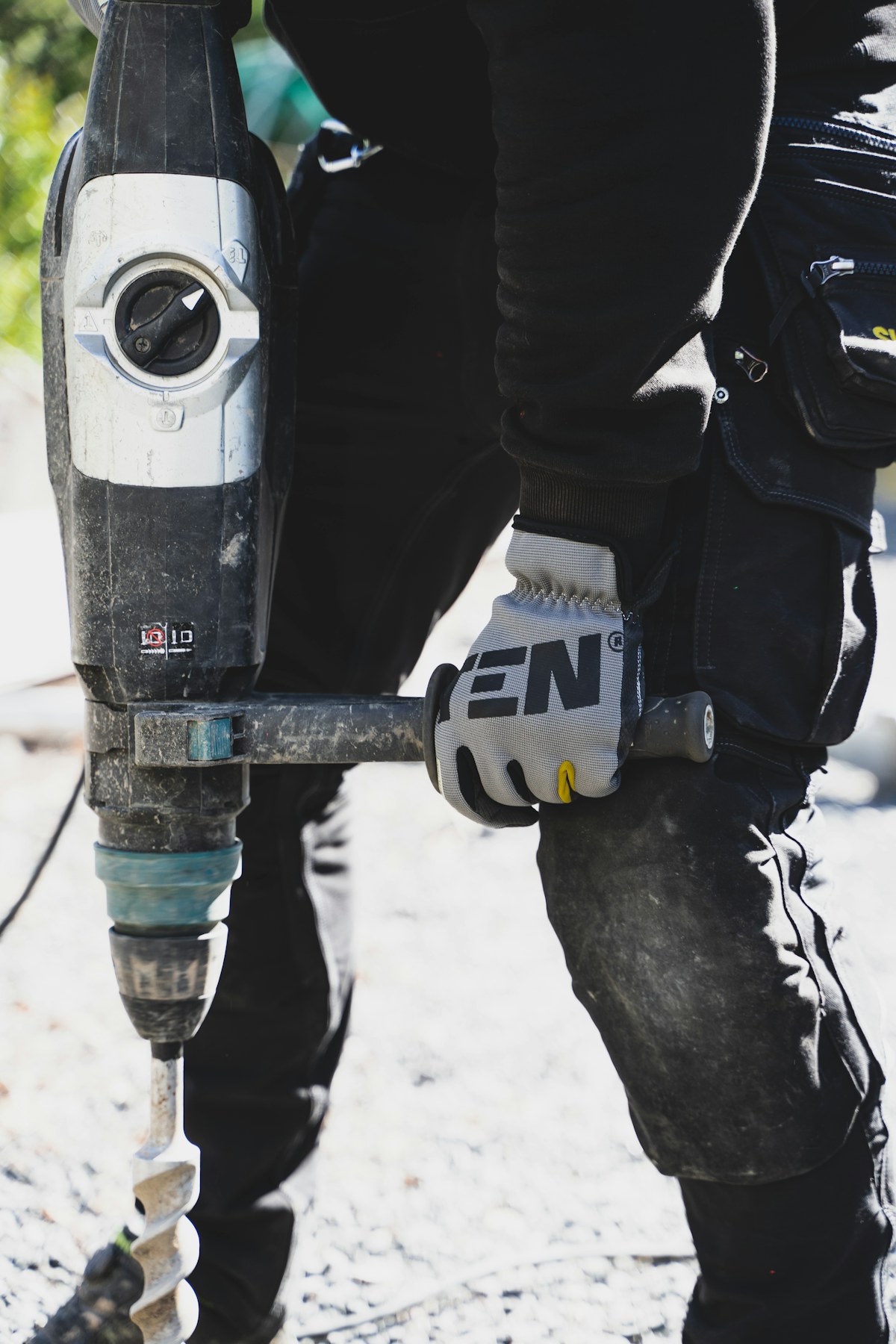
Most residential core drilling involves dry diamond bits, a standard cavity brick external wall, and a single-trade application: a boiler flue, a soil stack, a waste pipe, or an extractor fan duct. The equipment requirements are modest, no water supply is needed, and the work completes in under 30 minutes for a single penetration. Where properties present concrete elements — ground-floor slabs, concrete party walls, or apartment-block structural walls — the specification changes, and wet coring with a dedicated machine becomes necessary.
Residential Core Drilling at a Glance
- Most domestic applications: dry core bit through cavity brick external wall
- No water supply needed for brick and blockwork — turbo or slotted barrel air cools the bit
- M-Class dust extraction required under COSHH 2002 for all masonry drilling
- Boiler flue: 107mm; soil stack: 117mm; 40mm waste pipe: 52mm; extractor fan: 107mm
- Concrete ground-floor slab or solid concrete walls: wet coring required
- Listed buildings: listed building consent required before drilling any wall or floor
- Apartments with concrete party floors: GPR scan advisable before coring through slabs
Common Residential Core Drilling Applications
| Application | Hole Diameter | Typical Material | Method |
|---|---|---|---|
| Boiler flue (60/100mm concentric kit) | 107mm | Cavity brick external wall | Dry core bit |
| Boiler flue (80/125mm concentric kit) | 133mm | Cavity brick external wall | Dry core bit |
| 100mm extractor fan duct | 107mm | Cavity brick or blockwork | Dry core bit |
| 125mm MVHR supply or return | 133mm | External cavity wall | Dry core bit |
| 110mm soil stack | 117mm | External or party wall (brick) | Dry core bit |
| 40mm waste pipe (bath, basin, shower) | 52mm | External brick wall | Dry core bit |
| Single cable or conduit entry | 20–32mm | Brick, blockwork, or cavity wall | Dry core bit or SDS adaptor |
| Service penetration through concrete floor slab | 50–150mm | Reinforced concrete ground slab | Wet core bit — dedicated motor |
For the full size-to-application reference: diamond core drill bit sizes chart. For the correct hole diameter for a boiler flue by flue kit type: what size core drill for a boiler flue.
Wall Construction in UK Domestic Properties
The correct bit specification and method depend on the wall type. UK domestic properties use several distinct external and internal wall constructions:
Cavity Brick Wall (post-1920s domestic)
Two leaves of clay or sand-lime brick separated by a 50–100mm cavity. The most common UK external wall construction. Outer and inner leaves are typically 102mm thick. Total wall penetration depth for a 107mm boiler flue core: approximately 270–330mm including cavity. A hard-bond dry core bit at 300–500 RPM handles both leaves without specification change. The cavity is clear space — no drilling through it.
Solid Brick Wall (pre-1920s domestic)
Single or double-thickness solid brick wall with no cavity. Pre-1920s terraced and semi-detached properties commonly have solid 215mm (one-brick) or 327mm (one-and-a-half-brick) external walls. Dry core drilling still applies — the penetration depth is greater, and the pilot drill and bit must be long enough to core through the full wall thickness in a single pass. 300mm SDS extension pilots are available for one-and-a-half-brick walls.
Timber Frame with Masonry Outer Leaf
Modern domestic properties (post-1980s) increasingly use timber frame construction with a single-skin brick outer leaf. The outer leaf is typically 102mm of brick. Behind it is a breather membrane, a 50mm cavity, and the structural timber frame with insulation. A 107mm core through the brick outer leaf and a separate penetration through the frame plywood panel are typically required for flue work. The brick is standard dry coring; the plywood or OSB uses a standard spade or hole saw.
Concrete Block or Dense Block Wall
Inner leaf cavity wall blockwork is typically 100mm dense aggregate block or lightweight Aircrete block. Both suit dry core bits — the same specification as the outer brick leaf. Aircrete (Thermalite, Celcon) cuts more quickly and requires lighter feed pressure. See: dry core drilling services.
Concrete Party Walls and Floors (apartments)
Flats and apartment blocks built with in-situ or precast concrete party walls and intermediate floor slabs require wet coring. If the concrete is suspected to be post-tensioned — common in blocks built from the 1960s onwards — a GPR scan by a specialist is required before drilling any floor. See: wet core drilling services and GPR scanning before core drilling.
Equipment Requirements for Domestic Core Drilling
The minimum equipment for the most common domestic drilling tasks:
Small Holes (up to 50mm) Through Brick
An SDS Plus or SDS Max drill on rotation-only mode with an SDS core bit adaptor and a small dry diamond core bit handles holes up to approximately 50mm through standard brick and blockwork. This is typically sufficient for cable entries, conduit sleeves, and 40mm waste pipe holes. The adaptor converts the SDS arbor to a standard 1/2" BSP or M16 thread to accept the core bit. See: SDS Plus vs SDS Max core drill guide.
Trade Sizes (65–133mm) Through Brick
A dedicated core drill motor rated at 1,200W or above with variable speed is the correct tool for 107mm and 117mm trade holes. SDS adaptor setups are undersized for sustained 107mm coring in brick — they lack the torque output and may overheat under load. A dedicated motor fitted with a hard-bond dry core bit completes a standard boiler flue hole in 5–10 minutes through a cavity brick wall. See: core drill machine buyer's guide.
Concrete Floor Slabs
A dedicated core drill motor with a ½" BSP water-feed chuck, a wet-rated diamond core bit, and a continuous water supply. For floors, a vacuum-base or anchor-bolt floor rig prevents torque reaction at the machine. A slurry collection tray or dam and vacuum complete the setup. See: concrete core drilling services.
Dust Control on Domestic Sites
Dry core drilling through brick and masonry generates respirable crystalline silica (RCS) — the fine dust fraction that penetrates deep into the lungs and causes silicosis. COSHH 2002 requires that RCS exposure is reduced to as low as reasonably practicable on all work tasks, including domestic trade work.
An M-Class dust extraction vacuum connected to a dust shroud fitted around the core bit is the minimum control measure required by the HSE's CIS36 guidance for masonry drilling. This applies to domestic trade work as well as commercial sites — there is no exemption for residential properties under COSHH 2002.
In practice, fitting a dust shroud to the core drill and connecting it to an M-Class vacuum keeps the work area clean, protects both the tradesperson and the property's occupants, and removes dust before it can settle into furnishings, carpets, and ventilation systems. See: core drill dust extraction guide and silica dust control in UK construction.
Planning and Building Regulations for Domestic Drilling
Planning permission is not required for service penetrations through domestic walls and floors. Drilling a hole for a boiler flue, soil stack, waste pipe, or cable entry is permitted development. Exceptions:
- Listed buildings: Any alteration to a listed building — including drilling a hole through a wall — requires listed building consent from the local planning authority. This applies regardless of whether the building is Grade I, II*, or II listed.
- Party walls (Party Wall Act 1996): Where a party wall separates two dwellings and drilling is required through it, the Party Wall Act may apply. A party wall notice may need to be served on the adjacent owner before work begins, particularly where the penetration involves structural notching or is below DPC level.
- Building Regulations Part J: Boiler flue installations must comply with Part J (combustion appliances and fuel storage systems). The flue manufacturer's specification determines the exact hole size and clearances required — the installation is notifiable under Part J unless the installer is a Gas Safe registered engineer using a self-certification scheme.
For a full regulatory overview: core drilling permits and regulations: UK guide.
When to Use a Specialist Contractor for Domestic Work
Most domestic drilling is within the capability of an experienced plumber, heating engineer, or electrician with a correct machine and bit. A specialist drilling contractor is advisable when:
- The element to be drilled is concrete (ground-floor slab, concrete party wall, or flat-slab floor in an apartment block)
- The building age and construction suggest post-tensioned concrete floors — common in apartment blocks from the 1960s onwards
- The hole diameter required is above 133mm through a structural or load-bearing wall
- The property is listed and the work must be documented for listed building consent compliance
- The party wall is shared and drilling involves structural intervention
- Services mapping has not been carried out and the risk of striking buried pipes, conduits, or cables is present
See: core drilling for plumbers, core drilling for HVAC contractors, and core drilling for electricians.
Residential Core Drilling: Common Questions
What size hole do I need for a boiler flue through a cavity brick wall?
The standard boiler flue concentric kit for most UK condensing boilers uses a 60mm inner / 100mm outer flue, requiring a 107mm core hole. Some larger outputs use an 80mm / 125mm kit, requiring a 133mm core hole. Always confirm the flue kit diameter before drilling — the manufacturer's installation instructions specify the exact hole size and minimum clearances. For a full size reference by flue type and boiler manufacturer: boiler flue core drill size guide.
Do I need dust extraction for domestic core drilling?
Yes — M-Class dust extraction is legally required under COSHH 2002 for dry masonry drilling, including domestic trade work. The HSE's CIS36 guidance sheet specifies M-Class vacuum extraction as the minimum control measure for drilling tasks that generate respirable crystalline silica (RCS) dust. There is no exemption for residential properties. In practice, an M-Class vacuum connected to a dust shroud on the core drill keeps the work area clean, protects the tradesperson, and protects the property's occupants.
Can I use an SDS drill to core drill a boiler flue hole?
An SDS drill with a core bit adaptor can drill holes up to approximately 50mm through standard brick and blockwork. For a 107mm or 133mm boiler flue hole, a dedicated core drill motor rated at 1,200W or above is required — SDS adaptor setups lack the sustained torque output to complete a full-depth 107mm hole reliably in a cavity brick wall, and the motor may overheat. A dedicated machine completes the hole in 5–10 minutes; an underpowered SDS adaptor setup risks a stuck bit mid-wall.